


Speech-Language Therapy, Therapy Professionals, Travel Therapy Insights
Steps to Becoming a Successful Speech Language Pathologist
8TH MAY, 2026

5 October 2026 | Velina Velikova | 23 mins. reads
A great PE class can change how a student sees movement, confidence, and belonging. Physical education teacher jobs give educators and allied professionals a chance to make that difference while building a career that can fit school-year, contract, or travel goals.
Whether you’re a health fitness teacher, sports instructor, certified teacher, or therapy professional, you may work in public schools or an independent school district. A kinesiology background, daily responsibilities, compensation, and hiring calendars all matter when comparing fall vacancies and choosing a role that offers meaningful student connections and a fresh community to call home.
The usual path begins with a bachelor’s degree in physical education, kinesiology, exercise science, or a related teacher-preparation program. Coursework often covers motor development, health, movement instruction, assessment, classroom management, and inclusive teaching.
After completing student teaching, candidates apply for state licensure to become a certified teacher. States may also require subject-area exams, fingerprinting, background checks, mandated reporter training, or other documentation. Public schools and an independent school district may list requirements differently, so confirm current rules with your state education agency before applying.
CPR, first aid, and AED training are common expectations, while aquatic programs may also value a water safety instructor credential. Beyond credentials, schools look for educators who can plan lessons, communicate clearly, assess progress, manage active groups safely, and adjust instruction for learners with different strengths and needs. A job description may distinguish a health fitness teacher role from a health teacher role, since licensure expectations can differ.
A strong PE teacher creates structure without making movement feel rigid. Students need clear routines for entering the gym, using equipment, handling transitions, and participating safely.
Lesson planning also matters. Effective instruction connects activities to grade-level standards and gives students a way to show growth. A teacher may assess throwing form, cardiovascular endurance, teamwork, knowledge of safety rules, or a student’s ability to use a modified piece of equipment.
Communication holds the role together. PE teachers speak with classroom teachers, school nurses, counselors, special education staff, aides, and families. That teamwork helps students receive consistent expectations across the school day.
Adapted physical education usually begins with a PE or special education credential, then adds state-approved preparation in disability-focused instruction. Depending on the state, that can include additional coursework, practicum hours, supervised fieldwork, or a formal endorsement.
SHAPE America offers resources tied to 15 adapted PE standards and the CAPE pathway, which recognizes nationally certified adapted physical educators. CAPE can strengthen professional preparation, but it doesn’t replace the state license or assignment rules a district requires.
State policies vary widely. Minnesota’s developmental adapted PE preparation standards address evaluation and specially designed PE for eligible students from prekindergarten through age 21. Texas permits several teaching certificates for adaptive PE assignments when educators also document relevant knowledge through coursework, seminars, or in-service records.
PE teaching involves far more than supervising games or handing out equipment. Unlike a sports instructor, a PE teacher plans standards-based lessons, models skills, monitors safety, assesses learning, documents results, and supports student access.

A typical day may include teaching an elementary school class locomotor skills, helping middle school students practice fitness concepts, and adapting a high school activity for a student with mobility needs. Each group needs age-appropriate goals and careful supervision.
Teachers check equipment, organize space, and set expectations before an activity begins. They also look for signs that a student needs a different pace, smaller group, visual cue, peer support, or safer movement option.
Documentation is part of the work. Assessment notes show what students can do now and guide the next lesson. For students receiving special education services, progress records may also inform IEP meetings and required reporting.
General PE teachers instruct the broader student population and follow grade-level physical education standards. They adapt lessons as needed, but their central responsibility is the core PE program for all students.
An adapted PE teacher provides individualized instruction for students whose disabilities limit access to general PE. The role often includes formal assessment, IEP goal development, specialized teaching strategies, progress monitoring, and collaboration with the IEP team.
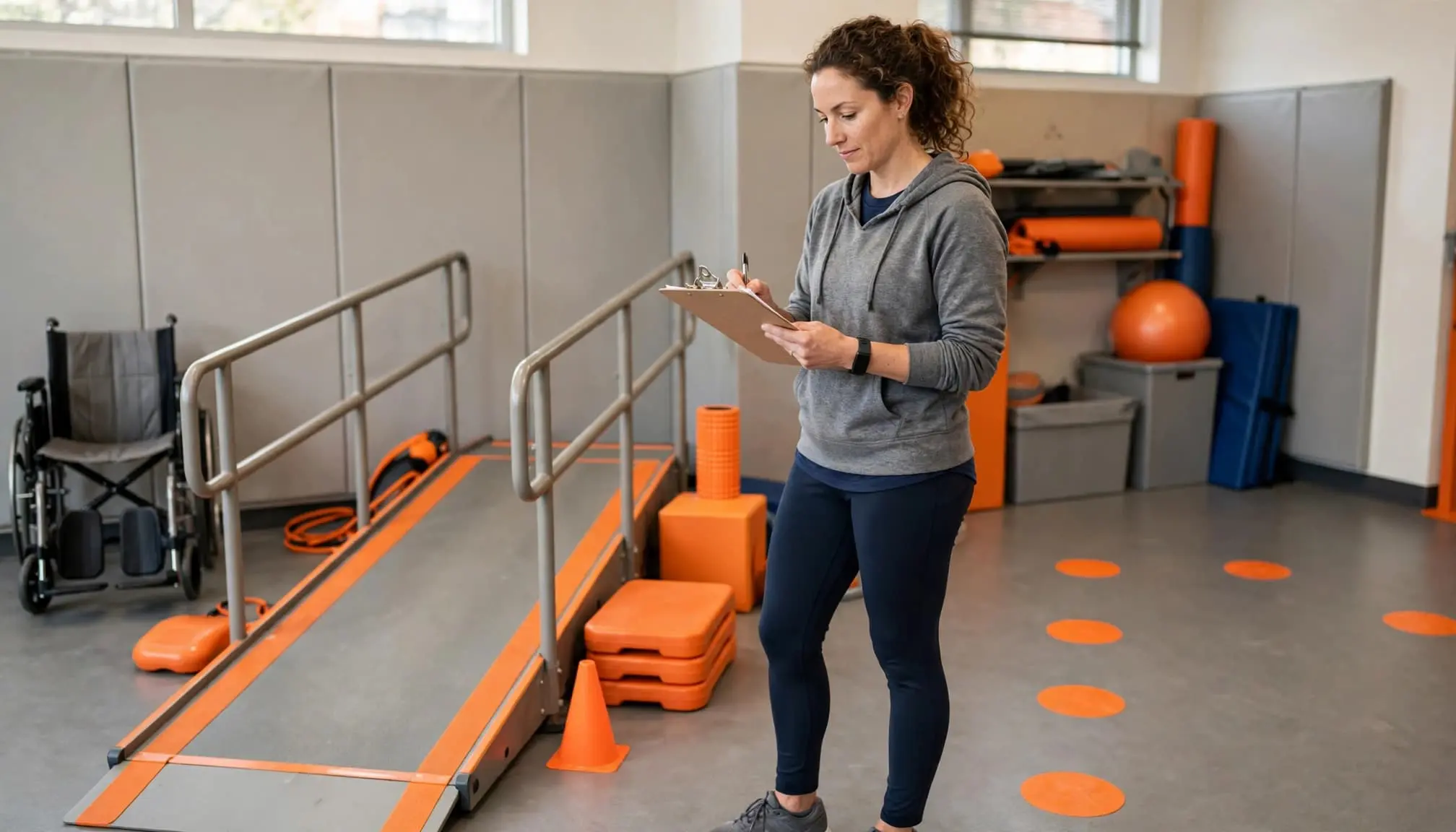
Modified equipment can include lighter balls, visual targets, adapted grips, gait supports, or larger striking surfaces. Teachers may also change the setting, rules, pacing, or communication method. Expectations stay meaningful, while the supports change to help the student participate.
Adapted PE is a specialized instructional service, not a reduced version of physical education.
Collaboration makes those supports more effective. Occupational therapists, physical therapists, speech-language pathologists, special educators, classroom aides, and an athletic trainer can share information about injury prevention and safe participation, helping students practice skills with confidence. Families can also provide valuable insight into the student’s needs.
School PE and adapted PE salaries commonly follow district teacher pay schedules. In public schools, pay can vary by state, district funding, local cost of living, years of experience, degree level, endorsements, and the difficulty of filling a position.
Titles and pay schedules can also vary by employer. A health fitness teacher, for example, may follow a different schedule than a traditional PE role. An independent school district may publish its own salary schedule for comparison.
The U.S. Bureau of Labor Statistics reported a $72,040 median annual wage for high school teachers in May 2025. That figure offers useful context, but it isn’t a universal salary for physical educators. A district’s published schedule and the exact assignment provide a more accurate comparison.
Benefits can include health coverage, retirement plans, paid leave, professional development, and salary steps for graduate credits. An independent school district may differ in benefits, work calendars, and assignment terms. Review the complete package, including workload, travel between campuses, and retirement contributions.
Travel and contract adapted PE roles can suit educators who want experience in a new community without committing to one district right away. Assignments may involve school-based services, rehabilitation settings, or other education and care environments, depending on the employer.
School contracts often follow the school year and may run nine or 10 months. Hiring timelines may reflect fall vacancies, while contract-start dates can vary. Medical travel assignments often run about 13 weeks, though every contract has its own schedule and terms. A strong placement may lead to an extension when both the professional and employer want to continue.
Some employers offer recruiter guidance, mentorship, licensure reimbursement, travel reimbursement, housing support, or health benefits. Confirm every item in writing before accepting an offer. Compensation should account for taxable pay, any available stipends, reimbursement timing, and expected unpaid gaps between assignments.
At Pioneer Healthcare, we support travel clinicians throughout the placement process. Your recruiter walks you through each step, from reviewing the opportunity and preparing for the interview to confirming contract details and getting ready for your first day.
Before an interview, we’ll help you identify the questions that matter most. Ask about the caseload, student age range, number of campuses, daily schedule, documentation platform, available equipment, and whether the role includes IEP services. We can also help you confirm who will handle onboarding and provide clinical or educational supervision.
You should know who to contact about evaluations, progress notes, schedules, and school procedures before your assignment begins. Our team stays available throughout the process so you can raise concerns, review changes, and make informed decisions before signing.
Keep communication open with your Pioneer recruiter, and tell us about your preferred location, setting, pay, and schedule. We work to match you with roles that fit your goals while explaining where flexibility may help expand your options. We also respect your job search by never submitting your resume without your permission.
State education agency sites, career pages for public schools, independent school district websites, and school job boards are strong starting points for permanent positions. Review each posting’s application deadline, required credentials, and employment terms. SHAPE America and professional communities such as AAPAR and NCPEID can also help educators connect with adapted PE resources and peers.
Staffing agencies add another route for leave coverage, short-term contracts, and travel opportunities across the country. To compare current openings, Find Travel Jobs that align with your credentials, preferred setting, and target location.
Start conversations about a planned assignment about eight weeks before your ideal start date. If you are already on contract, discuss the next role four to six weeks before the current assignment ends. Openings for the school year often require earlier planning because districts begin hiring months before classes start. This timing is especially important when targeting fall vacancies.
District job boards work well when you want a direct-hire teaching position in public schools, a stable campus assignment, and a local salary schedule. They also make it easier to review public benefits and contract calendars.
An independent school district may require a district-specific application and additional documentation. A staffing partner can be useful if you want several location options, need help organizing licensure steps, or prefer contract work before choosing a permanent district. Short-term work as a substitute teacher can provide school experience, while an extracurricular coaching pool may offer seasonal opportunities.
New graduates often benefit from structured school settings with predictable calendars and built-in collaboration, especially when applying for fall vacancies. Ask about mentorship, orientation, and who will support you during the first weeks of an assignment.
Keep your resume focused on the job description and the work schools need. List active licenses, grade levels taught, adapted PE coursework, IEP participation, assistive equipment experience, and kinesiology education alongside your status as a certified teacher.
Include relevant work with autism, developmental delays, orthopedic needs, or multiple disabilities. Related experience as a sports instructor or water safety instructor can also help when it supports the position. Listings may use alternate titles such as health fitness teacher, so confirm each role’s licensure requirements.
Use concrete examples to stand out in the applicant pool. Describe how you managed a busy class safely, measured student progress, adjusted a lesson after an assessment, or communicated with a family about a student’s goals.
Candidates with therapy backgrounds can highlight interdisciplinary collaboration. When applicable, frame your qualifications as a certified teacher while emphasizing observation, documentation, accommodations, and student-centered communication. OTs, PTs, SLPs, nurses, and special educators often bring these valuable skills.
Clinical experience can be highly relevant, especially for understanding movement, access, and interdisciplinary care. However, it usually doesn’t replace a state teaching license or adapted PE requirements. Review your state’s educator pathway before applying.
Some districts require separate coaching training, first aid credentials, or background clearances for extracurricular sports. PE licensure alone may not cover every coaching assignment, so check district policy for the sport and age group.
Many school placements align with a semester, a leave of absence, or a full academic year. Nine- and 10-month contracts are common for school-based work, while the actual term depends on the district’s staffing need.
A maintained tax home is generally needed to qualify for non-taxable housing and meal stipends. It must be a real primary residence or business location where you have duplicated living expenses. Speak with a travel healthcare tax professional about your individual situation.
Tell your recruiter as soon as a problem develops. Early termination can carry professional or financial consequences, and the best options depend on the contract and circumstances. Early, honest communication gives the school and staffing team more time to respond.
Only accept when the role matches your credentials, goals, and practical needs. Review the caseload, schedule, pay package, housing costs, cancellation terms, and support structure before you agree.
The strongest physical education careers combine valid licensure, thoughtful preparation, and a commitment to helping every student participate. General PE and adapted PE professionals create safer, more welcoming opportunities for students to move, learn, and gain confidence.
Clarify the setting and location that fit your life, then prepare a resume that shows your teaching and teamwork skills. School-based teaching may lead to roles as a sports instructor or opportunities in after school enrichment. With a clear plan and supportive career partner, you can build experience while expanding student access and impact.

Speech-Language Therapy, Therapy Professionals, Travel Therapy Insights
Steps to Becoming a Successful Speech Language Pathologist
8TH MAY, 2026

Therapy Professionals
Why Psychology is Important in Healthcare Careers
6TH FEBRUARY, 2026

Physical Therapy, Therapy Professionals, Travel Therapy Insights
Sports Medicine Physical Therapist Salary Trends Worth Knowing
9TH APRIL, 2026

Therapy Professionals, Travel Therapy Insights
How Much Does a Therapist Make in Private Practice?
15TH JUNE, 2026