


Travel Therapy Insights
2026 Travel Physical Therapist Salary: Breakdowns, Bonuses, and Maximizing Your Earnings
9TH JANUARY, 2026

9 September 2026 | Velina Velikova | 18 mins. reads
Becoming and working as a PTA can be hard, but the challenge is usually physical, emotional, and detail-focused rather than centered on advanced academic training. If you’re wondering, is being a physical therapist assistant hard, expect active days, close patient contact, and a steady need for sound judgment. Early hands-on experience can help clinicians build confidence and manage daily challenges.
PTAs provide skilled care under a physical therapist’s supervision. Unlike physical therapist aides, PTAs directly implement rehabilitative exercises and other treatment activities. Physical therapist aides typically handle non-clinical support tasks. The work asks for stamina and patience, yet it also gives you a front-row seat to patients regaining movement and confidence.
Being a PTA at Pioneer Healthcare gives you access to assignments that match your clinical experience, preferred setting, and career goals. You can work in outpatient clinics, hospitals, skilled nursing facilities, schools, or home health while receiving support from a dedicated recruiter and in-house teams. Pioneer Healthcare also provides regular check-ins, emergency support, payroll assistance, and help with compliance needs, so you can focus on patient care throughout your assignment.
Is being a physical therapist assistant hard in day-to-day practice? It can be. Navigating a busy work environment requires stamina. PTAs spend much of a shift standing, bending, reaching, demonstrating movement, and assisting with transfers. Physical therapist aides share some active clinic duties, but PTAs typically manage greater hands-on responsibility. Good body mechanics matter because small strains can add up over a full caseload.
The emotional side takes effort, too. A patient recovering from surgery, stroke, or chronic pain may feel discouraged when progress is slow. Others may arrive anxious, frustrated, or afraid of falling. You need to keep treatment encouraging while respecting pain, fatigue, and safety limits.
PTAs don’t independently diagnose patients or create the treatment plan. However, they must follow the supervising physical therapist’s directions closely. The physical therapist relies on PTAs to recognize meaningful changes, document treatment accurately, and report concerns promptly. That responsibility can feel weighty, especially early in your career, but it supports safe, consistent patient care.
Fast-paced productivity requirements can add stress to these clinical responsibilities. The role is more demanding than the typical duties of physical therapist aides, but it also offers a competitive median annual wage. Strong demand and a growing job outlook further reinforce the career’s value compared with entry-level work for physical therapist aides.
A PTA’s daily responsibilities change with the setting. Outpatient physical therapy clinics often bring a quick rotation of orthopedic and post-operative cases. Hospitals may focus on early mobility and safe discharge planning. Skilled nursing facilities, schools, and home health roles each bring different schedules, equipment, and patient needs.
Common responsibilities include therapeutic exercise, gait and balance training, stretching, transfer practice, mobility education, and approved modalities. PTAs advance patient rehabilitation by carrying out the established treatment plan. They may delegate sanitization and room preparation to physical therapist aides, while guiding physical therapist aides through equipment setup. PTAs also monitor changes in tolerance and update the supervising physical therapist.
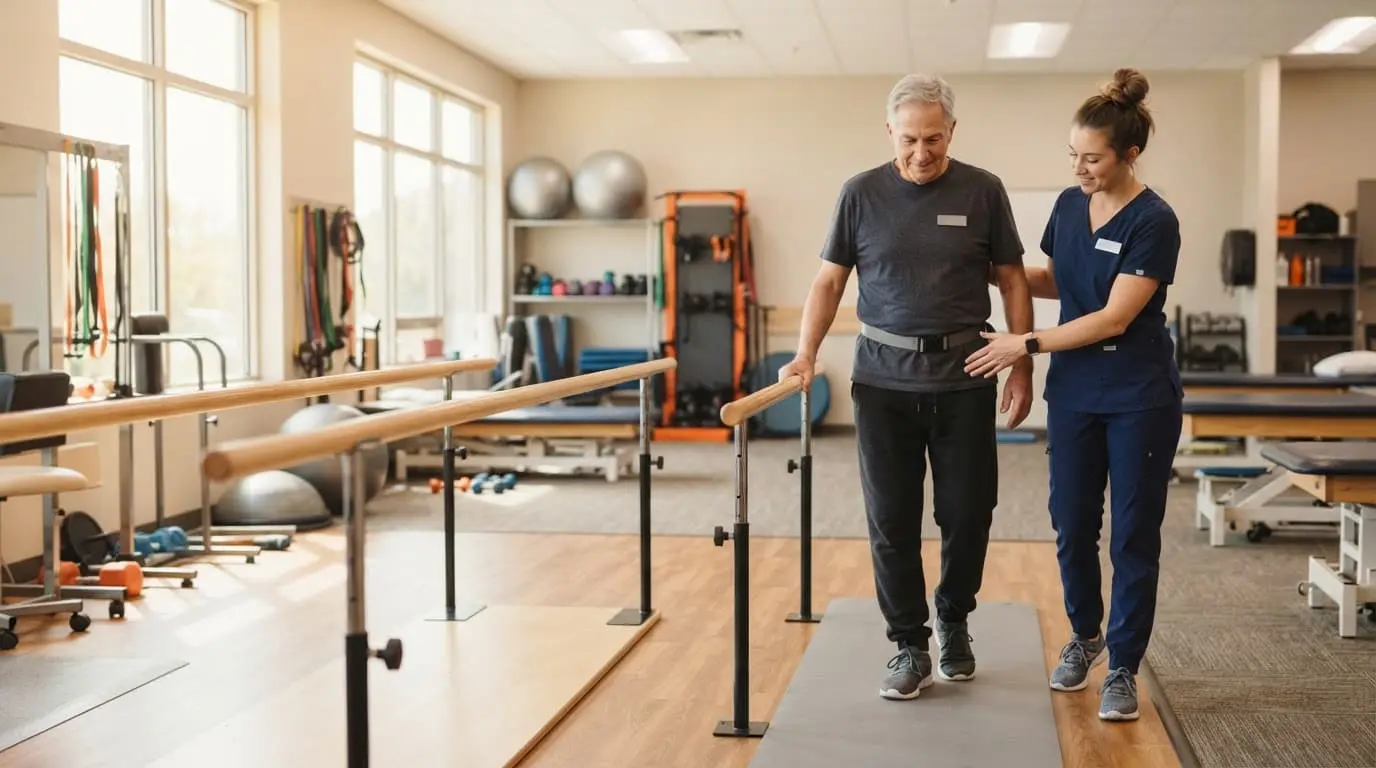
Hands-on treatment is only part of the job. A strong PTA gives clear instructions, adapts cues to the patient’s learning style, and motivates without pushing beyond safe limits. Unlike physical therapist aides, PTAs also make clinical observations within their scope and adjust treatment activities according to the established plan.
Accurate notes matter because they show what happened during the visit and guide the next clinician. PTAs meet documentation requirements by recording measurements, interventions, patient response, pain levels, and changes in strength, balance, or mobility. They also balance these standards with daily productivity requirements. Clear communication among the supervising physical therapist, the PTA, and physical therapist aides supports patient care and keeps visits moving smoothly.
A small change in gait, endurance, or pain can be the information a supervising PT needs to adjust treatment.
Communication and empathy make difficult moments easier to manage. Patients don’t respond the same way every day, so a PTA may need to slow the pace, change instructions, or provide more rest within the established plan of care.
Physical stamina helps, but clinical awareness matters just as much. PTAs need to notice unsafe movement patterns, manage time across a full schedule, and make decisions within their scope. Attention to detail is especially important when documenting care or setting up equipment.
Patience also has a practical role. Some patients need repeated education before a transfer, home exercise, or walker technique feels safe. Asking the supervising physical therapist for help or reporting a concern is a professional strength, not a shortcoming.
Most PTAs complete a CAPTE-accredited associate degree. The program combines anatomy, kinesiology, therapeutic procedures, and clinical education. This hands-on experience helps students build competence and separates licensed PTAs from physical therapist aides, who typically learn through on-the-job training.
Graduates complete additional clinical education rotations before taking the National Physical Therapy Examination for PTAs. State licensure requirements vary, and may include fees, background screening, or a jurisprudence exam. Continuing education units are also commonly required to maintain an active license. Many former physical therapist aides pursue this pathway because of the profession’s thriving job outlook.
Clinical rotations are where the job becomes real. Working alongside physical therapist aides helps graduates lead efficiently under a supervising physical therapist. It also prepares them to supervise physical therapist aides appropriately within their clinical scope. Build safe patient-handling habits early, ask questions, and practice concise documentation. Those routines make the first position less overwhelming.
The work can be demanding, but it offers a clear human payoff. You may help a patient take early steps after surgery, return to school routines, or move safely at home again. Progress isn’t always dramatic, yet those functional gains matter to patients and families.
PTAs can choose a preferred work environment, including outpatient clinics, hospital wards, skilled nursing facilities, schools, or home health. That variety supports work-life balance and creates opportunities for upward mobility without completing the longer doctoral path required to become a physical therapist.
According to the U.S. Bureau of Labor Statistics, physical therapist assistants had a median annual wage of $65,510 in May 2024. This provides clear salary expectations and generally exceeds the earnings of physical therapist aides. The agency projects employment growth of 22% between 2024 and 2034, an outstanding job outlook compared with many healthcare occupations. About 19,800 openings each year should support a broad job outlook and career advancement for clinicians moving beyond roles as physical therapist aides. Median annual wage figures vary by region, experience, setting, and contract terms, but PTAs consistently earn more than non-licensed physical therapist aides.
Travel assignments can introduce you to new communities, settings, and patient populations while building your clinical range. Travel therapy may also offer higher compensation and support career advancement through specialty certifications. Medical contracts often run about 13 weeks, while school-based roles commonly follow the academic calendar. Extensions may be available when both the clinician and facility want to continue.
Travel work also requires preparation. You’ll need to learn facility systems quickly, consider state licensure, arrange housing, and communicate early about your preferred location, setting, and start date. Starting the conversation about eight weeks before a target start date can leave room for licensing and compliance tasks.
Pioneer Healthcare offers travel clinicians dedicated recruiter support, in-house payroll, compliance and HR teams, regular check-ins, emergency support, and mentorship. Travel or licensing reimbursements may also be available when included in the contract. Review the full pay package before accepting a role, and never allow a submission without your permission.
Being a PTA can be challenging because the work is physically active, emotionally demanding, and detail-focused. With proper training, safe body mechanics, and experience, many clinicians become more confident managing the daily workload.
The hardest parts may include assisting patients with mobility, managing a busy caseload, documenting accurately, and supporting people who feel discouraged. PTAs must also recognize changes in a patient’s condition and report concerns promptly to the supervising physical therapist.
Most PTAs complete a CAPTE-accredited associate degree that includes classroom instruction and clinical education. Graduates must also pass the National Physical Therapy Examination for PTAs and meet their state’s licensure requirements.
Yes. PTAs directly carry out approved treatment activities such as therapeutic exercise, gait and balance training, stretching, transfer practice, and mobility education under a physical therapist’s supervision.
For people who enjoy active, hands-on healthcare work, the career can offer meaningful patient progress, varied work settings, and strong job demand. PTAs also earn more than typical physical therapist aides and may pursue outpatient, hospital, skilled nursing, school-based, home health, or travel roles.
Being a physical therapist assistant requires stamina, patience, careful communication, and sound clinical judgment within your scope. The work can be physically demanding, but a dependable median annual wage and meaningful patient progress make the effort worthwhile.
For clinicians who enjoy hands-on care, the physical therapist, PTA, and physical therapist aides work together as a coordinated team. Explore different settings, speak with experienced PTAs, and consider supported travel assignments; current physical therapist aides can explore PTA programs as a next career step.

Travel Therapy Insights
2026 Travel Physical Therapist Salary: Breakdowns, Bonuses, and Maximizing Your Earnings
9TH JANUARY, 2026

Therapy Professionals, Travel Therapy Insights
Understanding the Physical Education Teacher Salary in Healthcare and Education
11TH JUNE, 2026

Therapy Professionals, Travel Therapy Insights
How Much Does a Therapist Make in Private Practice?
15TH JUNE, 2026

Pyschology, Therapy Professionals, Travel Therapy Insights
How Much Does a Clinical Psychologist Make in the Health Industry?
5TH MARCH, 2026