


Therapy Professionals, Travel Therapy Insights
What Do You Need to Become a Physical Education Teacher?
14TH JULY, 2026
6 October 2026 | Velina Velikova | 23 mins. reads
A school-based educator’s day involves far more than organizing games or supervising a gym. A strong pe teacher job description includes instruction, student safety, assessment, documentation, and teamwork across the school community.
For clinicians and educators considering a school-based contract role, the work can feel familiar in important ways. Adapted PE teachers help students with disabilities access movement, fitness, recreation, and play while building confidence and independence. Understanding the full scope of the position makes it easier to find a role that fits your skills and goals.
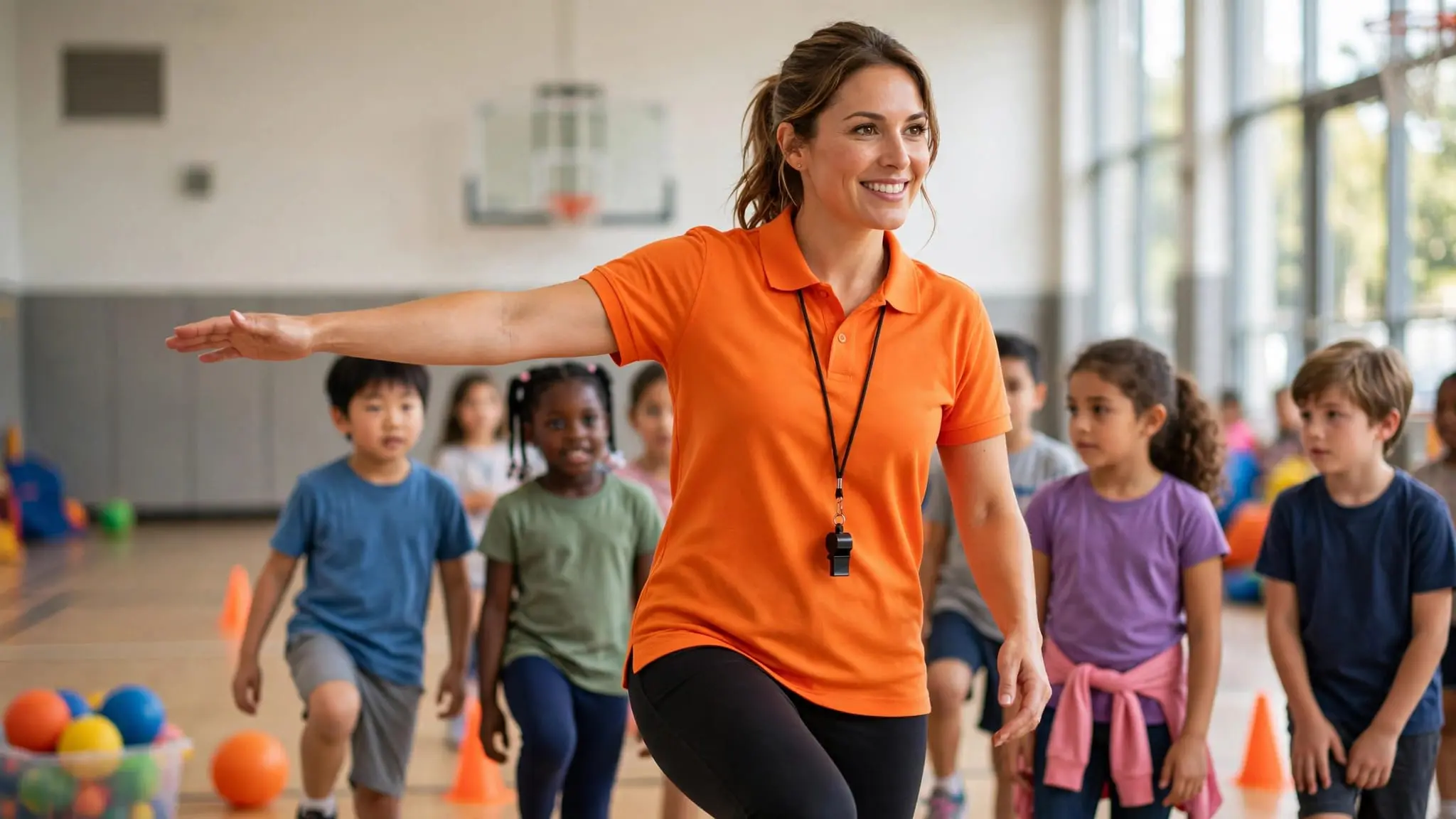
A physical education teacher plans and teaches movement, fitness, health, and recreation lessons for K-12 students. Lessons should match state requirements, national standards, and the developmental needs of each class. Students practice skills, learn how their bodies move, work with peers, and build habits that support lifelong wellness.
General PE teachers usually instruct whole classes. Adapted PE teachers provide specialized instruction when a disability limits a student’s access to the general program. Both roles promote inclusion, but adapted PE often involves individualized assessment, IEP services, and collaboration with special education teams.
Health and physical education reaches well beyond athletic performance. Effective lesson plans can support attention, motor planning, social interaction, self-regulation, and physical fitness.
Teachers work with students who have different cultures, interests, activity levels, and movement abilities. Some students enjoy competitive games, while others respond better to dance, walking, cooperative challenges, or individual fitness goals. The goal is meaningful participation in physical activity, not identifying the fastest or strongest student. Students can also build cooperation, sportsmanship, and confidence.
General PE focuses on grade-level outcomes for an entire class. Adapted PE offers individualized or small-group support when a student needs specially designed instruction to participate. In U.S. schools, grade levels typically follow the K-12 structure, while UK listings may organize year groups by key stage.
Under the Individuals with Disabilities Education Act, physical education can be a special education service when a student’s IEP requires it. The adapted specialist may assess motor needs, write progress updates, contribute to IEP goals, and coordinate with occupational therapists, physical therapists, special educators, aides, and families.
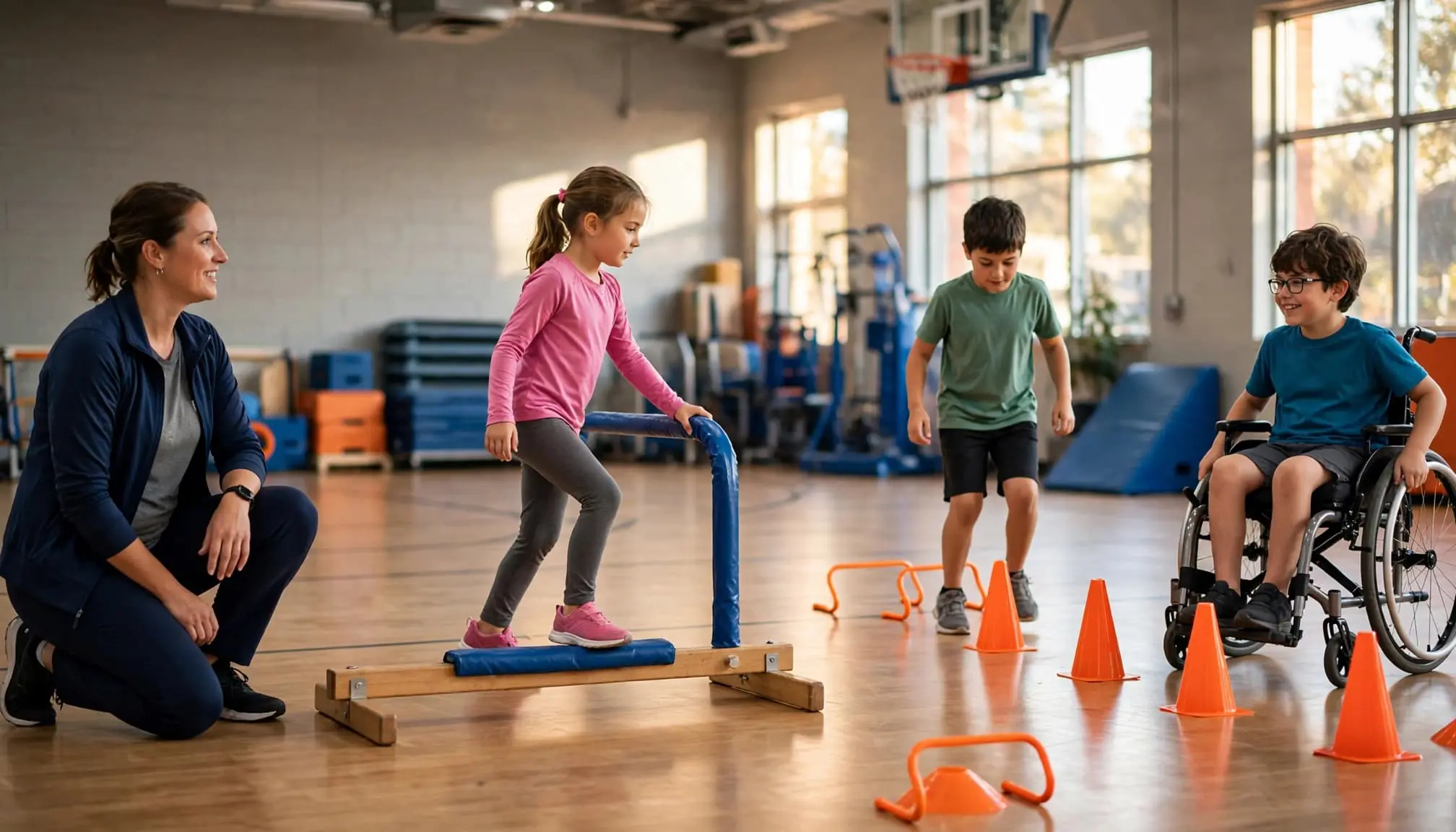
Daily physical education teacher duties include creating lesson plans, explaining movement concepts, demonstrating skills, observing students, and giving timely feedback. Teachers also supervise physical activity in open spaces where students are active and equipment is constantly in use.
Adapted PE may include direct instruction in gross motor skills, fitness, recreation, aquatics, dance, or perceptual-motor activities. High expectations still matter. Supports should help a student participate with purpose rather than remove meaningful challenge.
Teachers begin with a clear objective, then choose activities and progressions that give students multiple ways to reach it. Visual schedules, demonstrations, stations, and repeated practice can help students understand what comes next.
An adaptation might involve lowering a target, using a larger or lighter ball, changing boundaries, offering more practice time, or pairing students for peer support. These changes improve access while keeping the movement goal intact. A student practicing an overhand throw may use a soft ball and a closer target before building toward greater distance.
Before class, teachers scan the activity space and inspect equipment for damage, loose parts, or unsafe placement. They teach safety expectations, position themselves where they can supervise the full group, and plan transitions that keep downtime short.
Adapted PE teachers may also follow individualized safety plans and prepare accessible equipment. Incident reports, behavior documentation, and communication with school nurses or administrators may follow an injury or serious concern. Consistent routines help students know how to enter, participate, clean up, and leave safely.
Effective adaptations preserve the learning goal while changing the path a student takes to reach it.
Teaching is only one part of the work. Teachers assess skills during instruction, track attendance, record progress, complete report cards, and communicate with families. Those records show what students can do now, where instruction should go next, and how progress aligns with national standards.
Adapted PE assessments may look at balance, coordination, strength, mobility, motor planning, endurance, and participation. Teachers connect results to IEP goals and service decisions when specialized instruction is needed.
Assessment should be practical, age-appropriate, and focused on growth rather than student-to-student comparison. A teacher might use a skill rubric for catching, observe safe movement during a station, or record how long a student can stay engaged in physical activity. These methods provide clear evidence of student performance.
That information can change the next lesson. If several students struggle with body control during a jumping task, the teacher may add floor markers, model a slower progression, or reduce the number of directions. Families and school teams may receive updates on participation, motor skills, effort, and student progress toward stated goals.
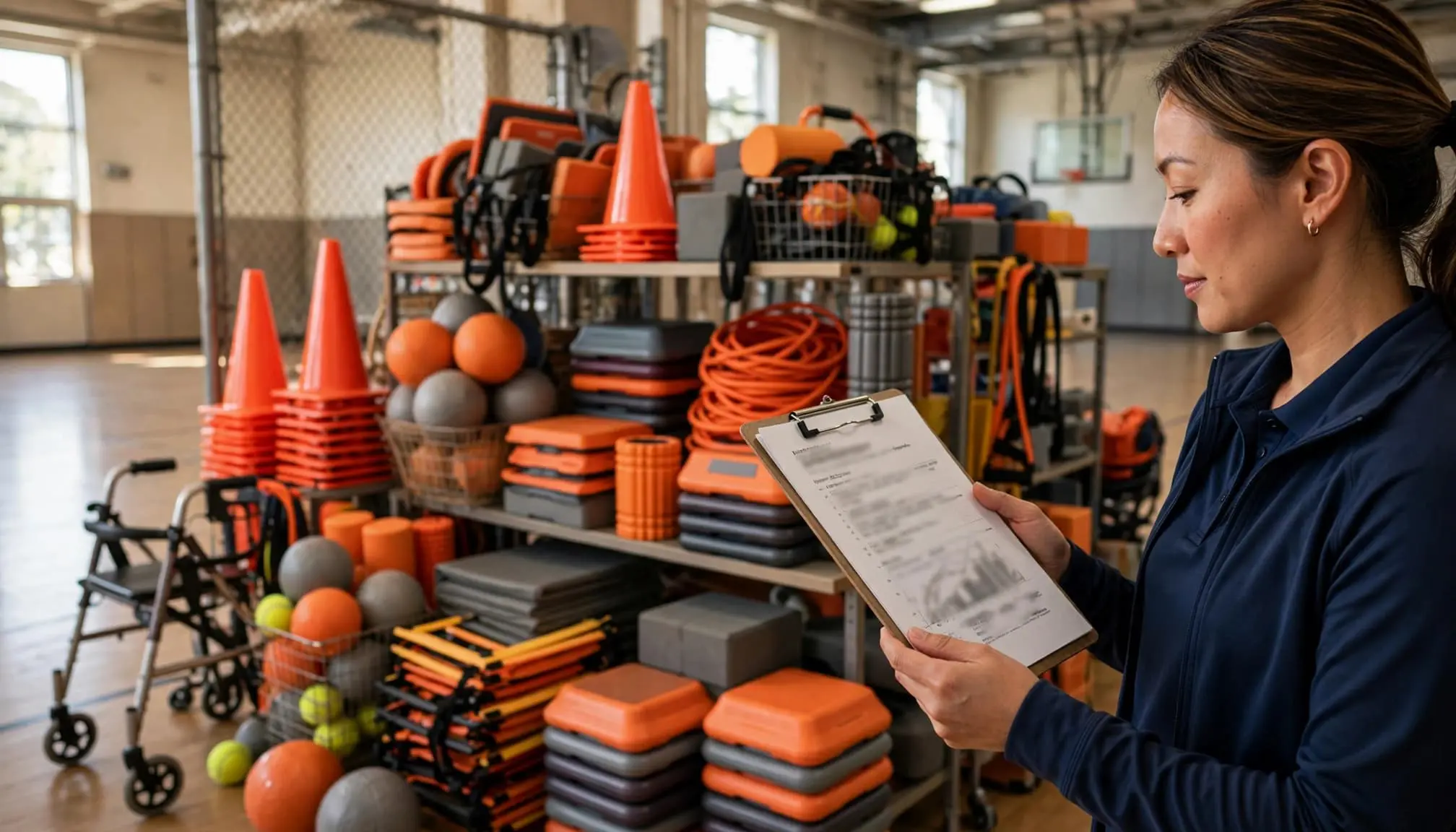
Adapted PE teachers participate in referrals, evaluations, goal development, progress reports, meetings, and service delivery. They don’t work in isolation. A student’s support plan may involve special educators, OTs, PTs, speech-language pathologists, paraprofessionals, administrators, and family members.
Regular communication helps students receive consistent supports across classrooms, therapy sessions, home routines, and the gym. For example, a PT’s mobility recommendations or an OT’s sensory supports may shape how an adapted PE teacher sets up an activity.
Most public school PE jobs require a bachelor’s degree in physical education, kinesiology, or a related field, followed by state K-12 educator licensure. U.S. candidates typically complete teacher training and earn teaching certification through an approved preparation program. International listings may use terms such as qualified teacher status and a dbs check, while U.S. districts generally require state licensure and background clearance. Some positions serve students in a secondary school setting.
Preparation programs typically include supervised student teaching or clinical fieldwork, content exams, curriculum design, and background checks.
SHAPE America identifies subject knowledge, planning, teaching, assessment, and professional responsibility as core parts of PE teacher preparation. These expectations also support alignment with national standards. CPR, first aid, and AED training are common employer or state requirements, although rules vary.
Adapted PE roles may call for an endorsement, graduate coursework, supervised practicum, or Certified Adapted Physical Educator credential. Requirements differ widely. Colorado, for example, outlines an adapted PE endorsement with a 200-hour practicum, while Connecticut does not require a separate certification for already certified PE teachers.
Strong educators communicate clearly, stay organized, and use consistent classroom management. They apply communication skills to build trust with students and families, support curriculum design, and pursue professional development.
They also need physical stamina, patience, flexibility, cultural responsiveness, and sound injury-prevention habits.
Clinicians often bring useful strengths to adapted PE. Experience with motor development, functional goals, disability support, and interdisciplinary teamwork can transfer well to school settings. However, clinicians still need the educator licensure and specialized preparation required for the role.
A resume should name the age groups, student populations, disabilities supported, and settings where you have gained professional experience. Include adaptive equipment, assessment tools, IEP participation, safety training, involvement in sporting events, and collaboration with families or related service providers.
Use results whenever possible. Instead of writing “provided adapted activities,” describe how you modified equipment, created access plans, or helped students make measurable progress toward functional movement goals. Choose references who can speak to your reliability, communication, judgment, and team-based practice.
A typical day for a PE teacher starts with reviewing a physical education schedule, setting out equipment, and adjusting lessons for weather, space, or student needs. Classes involve frequent physical activity and require steady attention. Elementary teachers may lead several short classes across many grade levels. At a secondary school, teachers often lead longer blocks in fitness, team sports, weight training, or lifetime activities.
Planning lessons around national standards, family communication, school duties, staff meetings, professional development, grading, and documentation fill time outside class. The schedule is structured, but the work remains active.
Between classes, teachers reset stations, check equipment, and review observations from earlier groups. Based on campus needs, they may supervise lunch, recess, locker rooms, or after-school activities.
Some teachers also coach sports teams, lead intramurals, or support wellness events, sporting events, and other extracurricular activities. Those duties can be rewarding, but candidates should confirm whether they are part of the contracted position.
An adapted specialist may move between direct services, small groups, inclusive classes, consultations, and individual assessments. Some students need one-on-one instruction, while others participate successfully in general PE with targeted supports.
Campus travel, equipment preparation, progress monitoring, and IEP meetings can shape the weekly schedule. Clear communication with families and service providers helps reinforce movement goals across school, home, and therapy settings.
District salaries usually follow educator pay schedules. They may change with experience, graduate credits, assignment demands, or added responsibilities. Review the complete offer, including benefits, licensure support, travel reimbursement, unpaid school breaks, caseload, planning time, and mentorship.
School-based contracts often align with the academic calendar and run nine to 10 months. Extensions may be available when the school and educator want to continue the relationship. Contract work can broaden your experience across student populations, curriculum models, and school cultures.
Career growth can lead to department leadership, district wellness coordination, adapted PE specialization, campus coordination, coaching, or consulting. Professional development can support these goals and strengthen your qualifications. Professionals exploring a new school-based assignment can Find Travel Jobs that match their licensure, preferred setting, and timeline.
Ask about class size, caseload, school locations, equipment, planning time, IEP expectations, supervision duties, sporting events, documentation systems, and available mentorship. Confirm whether coaching sports teams or supporting extracurricular activities is expected. Also confirm the start date, assignment length, renewal options, and any housing or travel support before accepting an offer.
Licensure and onboarding timelines deserve early attention. Qualified teacher status is a UK credential, while U.S. placements require state licensure. Candidates considering a new state should begin the application process well before their planned start date, especially for school-year positions.
A supportive placement, whether in an elementary, middle, or secondary school, has realistic expectations, working equipment, and accessible activity spaces. It also includes administrators who value inclusive participation and collaboration.
New educators and clinicians often grow faster with structured teacher training, regular feedback, and a mentor who understands the setting. A clear support structure matters more than a job title alone.
Public school roles generally require state educator licensure. Some states offer alternative certification or temporary pathways. Candidates should review current rules for their state and district.
The general educator provides grade-level instruction for student classes. The adapted specialist modifies instruction and assesses individual needs when a disability limits access to general physical education. This work often includes IEP-based goals and services.
OTs, PTs, SLPs, nurses, and special educators may bring strong disability support and team collaboration experience. Still, they must meet applicable educator licensure and adapted physical education training requirements before taking on the role.
Include certifications, student teaching or fieldwork, lesson planning, classroom management, assessment, safety training, and supported age groups. Add adaptive equipment experience, IEP work, and outcomes showing how your instruction improved access or student progress.
The strongest PE Teacher combines engaging instruction with safety awareness, thoughtful assessment, accurate documentation, and dependable collaboration. Their work helps students build movement skills and healthy routines, encouraging physical activity beyond school and supporting an active lifestyle.
Adapted specialists make that impact more personal by helping students with disabilities participate with confidence, independence, and appropriate support. Whether you want a permanent physical education role or a contract assignment, look for a placement that respects your experience and supports your growth.
Therapy Professionals, Travel Therapy Insights
What Do You Need to Become a Physical Education Teacher?
14TH JULY, 2026

Therapy Professionals, Trends & Staffing Insights
Travel Healthcare & Education Jobs: A Guide to PT, OT, SLP, Nursing, and More
3RD JULY, 2025

Therapy Professionals
Exploring the High Demand for Physical Therapist Assistant Jobs
19TH DECEMBER, 2025
Occupational Therapy, Physical Therapy, Travel Therapy Insights
Physical Therapist Assistant vs Occupational Therapist Assistant
6TH OCTOBER, 2026