


Travel Therapy Insights
Ultimate Guide to Travel Therapy Jobs in 2026: Opportunities Across Disciplines
9TH JANUARY, 2026
6 October 2026 | Velina Velikova | 19 mins. reads
Choosing a PTA or COTA path is a healthcare career decision shaped by the progress you want to help people make. Both roles offer hands-on rehabilitation, meaningful patient relationships, and travel contract opportunities, yet their clinical goals differ.
In this PTA-versus-COTA comparison, PTAs use physical therapy to improve movement and physical mobility, while COTAs use occupational therapy to help patients participate in daily life. Job duties, education, pay, setting, supervision, and state requirements all shape the right choice.
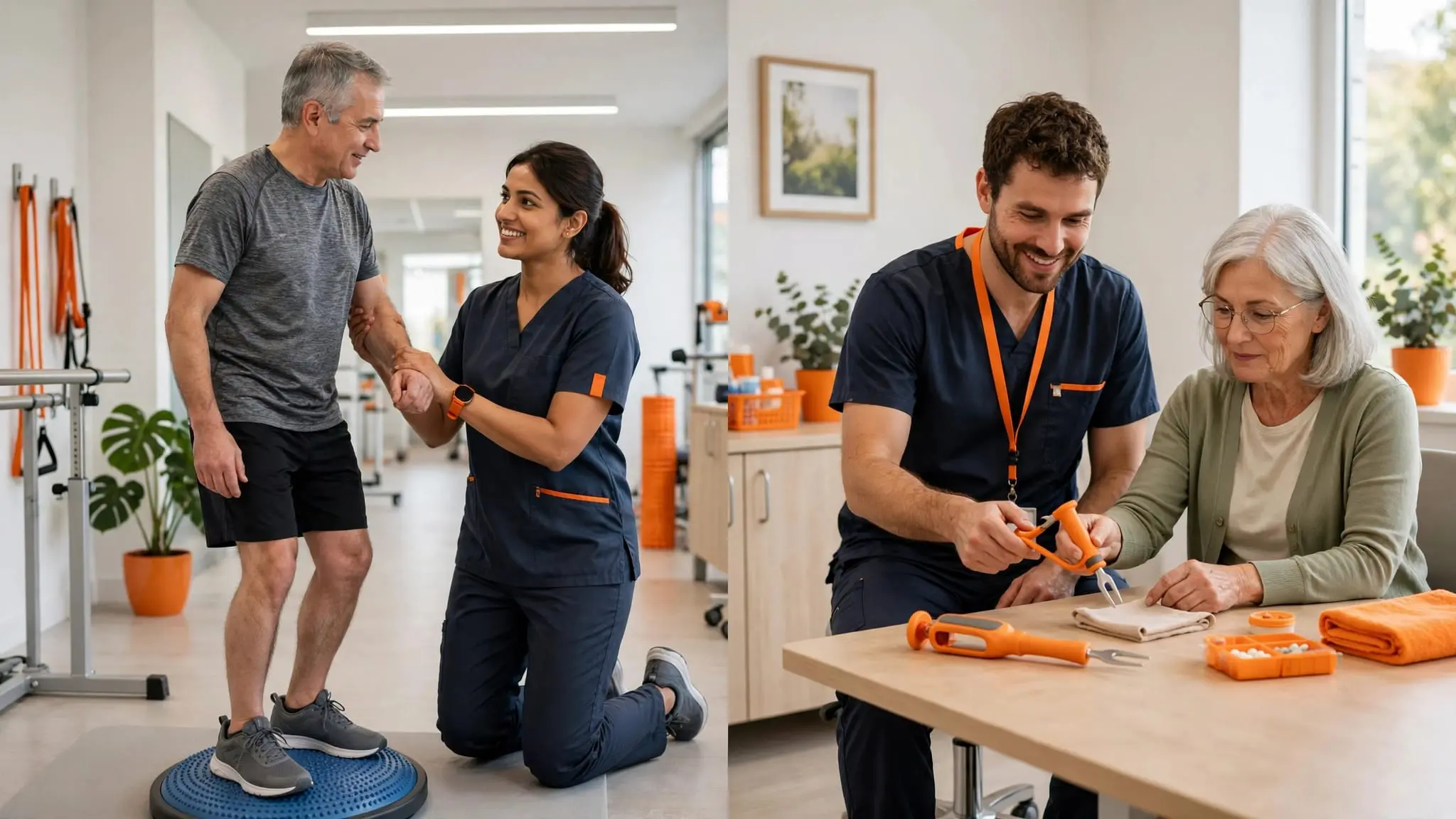
A physical therapist assistant works under a physical therapist to carry out treatment focused on mobility and physical recovery. A PTA may support someone after joint replacement, injury, stroke, or hospitalization as they rebuild strength and move safely through rehabilitation services.
An occupational therapy assistant works under an occupational therapist to help people manage daily living activities. An COTA may help a patient dress, prepare food, use assistive equipment, follow routines, or participate more fully at school and home.
| Role | Primary focus | Supervising professional |
|---|---|---|
| PTA | Physical therapy, strength, balance, mobility, pain, and physical function | Physical therapist |
| OTA | Occupational therapy, daily activities, fine motor skills, cognition, and independence | Occupational therapist |
Both roles provide treatment within the supervising therapist’s treatment plans. They are licensed clinical professionals, not therapy aides, and scope and supervision rules vary by state.

PTAs commonly guide rehab exercises, stretching, range of motion work, gait training, balance activities, transfers, and mobility practice. They may teach safe walker use, assist with bed mobility, use approved treatment techniques, and report functional changes to the physical therapist.
Occupational therapy assistants often work on dressing, bathing, feeding, household tasks, handwriting, fine motor activities, cognitive routines, and adaptive equipment. They may also help modify a home, classroom, or daily routine so a patient can participate with less assistance.
Both assistants educate patients and families, document visits, monitor changes in condition, and communicate with the supervising therapist as part of patient care. Strong observation matters because a change in pain, endurance, cognition, safety, or function may affect the treatment plan.
The physical demands can also be significant. Safe patient handling, proper body mechanics, preparation, documentation, and clear communication remain part of every workday.
Most PTA and COTA career paths begin with an accredited associate degree. These allied health programs combine classroom instruction and clinical education. PTA students complete a program in physical therapy accredited by the Commission on Accreditation in Physical Therapy Education. COTA students complete an accredited occupational therapy assistant program. This education and clinical training prepare assistants to carry out treatment plans under supervision.
After graduation, each pathway requires a national certification exam. PTAs typically take the National Physical Therapy Examination for PTAs, administered by the Federation of State Boards of Physical Therapy. COTAs take the National Board for Certification in Occupational Therapy exam, then meet state licensing requirements.
State boards set the details for licensure, certification, scope, and supervision. Employers may also require background checks, CPR or BLS documentation, immunization records, drug screening, and continuing education.
Travel clinicians should start state authorization early, especially when a contract has a firm start date. Confirm current examination, licensing, jurisprudence, supervision, continuing education, and compliance rules directly with the relevant state board and employer.
A recruiter can help track paperwork and timelines, but clinicians remain responsible for holding an active credential. Keep digital copies of licenses, certifications, clinical records, and identification ready for credentialing.
PTA training may fit you if you enjoy anatomy, exercise, and structured clinical skills. Many PTAs also enjoy tracking measurable progress through supervised interventions.
COTA training may fit you if you enjoy creative problem-solving, adaptation, and activity analysis. Coursework and clinical training help develop the practical skills central to the role.
Neither path is easier or better. The stronger fit depends on the coursework, training, and supervision model that keep you engaged.
The U.S. Bureau of Labor Statistics reported May 2025 median salary figures of $68,380 for PTAs and $72,300 for COTAs. That equals median hourly wages of $32.88 for PTAs and $34.76 for COTAs.
Those figures provide a national benchmark, not a guaranteed rate. Geographic demand, experience, setting, specialty skills, scheduled hours, job outlook, and local employment conditions can all affect an offer.
Travel pay needs a closer look. Taxable hourly pay, housing and meal stipends, reimbursements, insurance, retirement benefits, and unpaid time between assignments can change the value of a contract. Explore current Travel PTA opportunities or Travel COTA opportunities with your preferred location and setting in mind. COTA stands for certified occupational therapy assistant.
Ask for the full pay package in writing before you accept an interview or sign a contract. Weekly pay alone doesn’t show whether an assignment fits your financial and career goals.
Compare these details across offers:
Flexibility with at least two priorities, pay, location, or setting, gives a recruiter more room to find a stronger match.
PTAs and COTAs work across clinical settings, including outpatient clinics, hospitals, inpatient rehabilitation, skilled nursing facilities, home health, schools, and community programs. The setting often changes the pace, documentation, patient care needs, and schedule more than the job title does.
PTAs often support physical therapy for orthopedic conditions, mobility limitations, fall risk, and post-hospital rehabilitation. Occupational therapy assistants may address self-care needs, neurological conditions, developmental needs, hand function, cognition, and school participation.
Travel assignments require comfort with changing teams, documentation systems, facility procedures, and state-specific scope rules. You can Find Travel Jobs that match your license, preferred setting, and timeline.
School-based PTAs may support safe movement through classrooms, hallways, playgrounds, and daily routines. School-based COTAs may work on handwriting, sensory needs, self-care, classroom participation, and access to learning in pediatric settings.
Schools can offer a predictable academic calendar and built-in collaboration with teachers and families. That structure can help newer clinicians build confidence while learning how therapy fits into a student’s day.
Hospital, inpatient rehabilitation, and skilled nursing roles may move quickly. Discharge planning, orthopedic recovery, complex rehabilitation, safety concerns, and productivity expectations can shape each shift.
Home health brings more independence. Clinicians travel between visits, teach families, assess safety in real homes, and complete detailed documentation without a full clinic team nearby.
A healthcare career as a PTA or COTA can grow through travel contracts, mentorship, continuing education, leadership opportunities, and experience with different patient populations. These allied health roles can also help you discover where your clinical interests are strongest.
Rehabilitation needs continue because of aging populations, chronic conditions, injury recovery, and improved access to services. The Bureau of Labor Statistics offers broader job outlook information, but local demand can also guide your decisions.
When choosing between these paths, compare the treatment plans you prefer, the patient goals you want to support, and the physical demands you can manage. Also consider schedule, travel interest, physical stamina, documentation comfort, and the support available at the facility.
A high-paying contract may not be the right first move if orientation is limited or supervision is unclear. Strong mentorship, a manageable caseload, and responsive communication can matter more early in your career.
School and skilled nursing placements can provide useful structure for many new clinicians. Experienced travelers may prefer an assignment that builds specialty knowledge, expands a professional network, or supports a preferred lifestyle.
Ask who will supervise you, how orientation works, and what productivity standards apply. Clarify the documentation system, patient population, available equipment, team communication, and the facility’s cancellation policy.
Discuss housing options, state licensure, travel reimbursement, and recruiter availability before you commit. Keep active recruiter relationships limited for clearer communication, and never allow an agency to submit your resume without your permission.
These are separate professions with different accredited education programs, national exams, and state authorization requirements. A PTA or COTA who wants to change paths generally needs to complete the educational and credentialing process for the new profession.
They can be, provided the setting offers appropriate orientation, supervision, and support. Ask direct questions about caseload, mentorship, documentation expectations, and the supervising therapist before accepting.
Many medical travel assignments run about 13 weeks, although contracts vary. School-based roles often follow the academic calendar and may last nine or 10 months, with extensions possible when the clinician and facility agree.
Yes. Hospitals, rehabilitation centers, skilled nursing facilities, schools, and home health organizations may employ both roles. They work with different supervising professions and may support the same patient from different functional angles.
Contact your recruiter as soon as possible and explain the circumstances. Early contract endings can have financial and professional effects, so prompt, honest communication gives the facility and agency time to address the situation.
Physical therapy supports safe movement and physical function. Occupational therapy helps people participate in the everyday activities that give life structure and independence.
Education, licensing, supervision, setting, pay, and travel needs all belong in your decision. Compare complete offers, ask clear questions, and choose a career partner who values transparency, mentorship, flexibility, and long-term growth.
The right role should fit your clinical interests and the places you want to call home, even if only for one contract.

Travel Therapy Insights
Ultimate Guide to Travel Therapy Jobs in 2026: Opportunities Across Disciplines
9TH JANUARY, 2026

Pyschology, Therapy Professionals, Travel Therapy Insights
Clinical Psychologist Salary in Healthcare: A Closer Look
10TH APRIL, 2026

Physical Therapy, Travel Therapy Insights
Discover the Average Physical Therapist Salary Across the US
15TH JUNE, 2026

Therapy Professionals, Travel Therapy Insights
How to Become a PE Teacher: A Step-by-Step Guide
5TH OCTOBER, 2026